
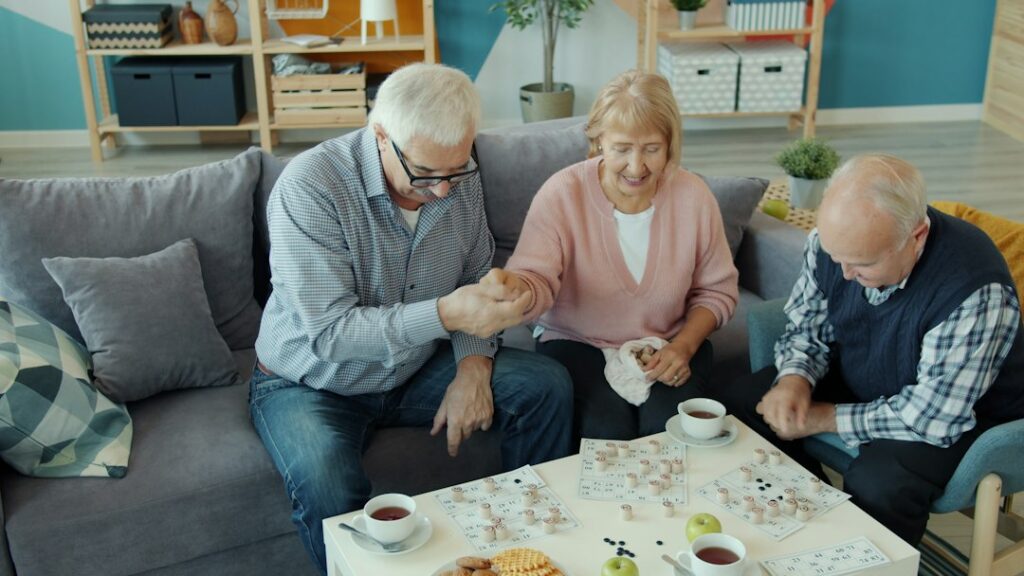
Assisted living can support social connection by making daily interaction easier, more predictable, and more accessible. Shared meals, group activities, casual conversations, and organized outings give residents regular opportunities to spend time with others without having to arrange every social visit independently.
For older adults in Quakertown, PA, this structure can be especially helpful when driving becomes difficult, family members live elsewhere, or seasonal weather makes leaving home less convenient. Social connection is not limited to large events. Familiar faces, brief conversations, and a sense of belonging can all contribute to emotional well-being.
How does assisted living reduce social isolation?
Assisted living reduces isolation by placing everyday social opportunities close to where residents live. Instead of needing to travel to visit someone, a resident may be able to join others in a dining room, activity space, lounge, garden area, or hallway.
This matters because isolation can develop gradually. A person may first skip an occasional outing, then stop driving at night, and eventually spend most days alone. Assisted living creates more natural points of contact throughout the day.
Common opportunities include:
- Eating meals with other residents
- Joining scheduled games, exercise sessions, or discussion groups
- Greeting neighbors in shared areas
- Participating in holiday, seasonal, or cultural activities
- Sitting with others during television programs, music, or crafts
- Taking part in planned outdoor time when conditions are comfortable
These interactions do not require a resident to be highly outgoing. A person can benefit from social contact while preferring quiet conversation or smaller groups.
What types of relationships can residents develop?
Residents may form several different kinds of relationships, including friendships, activity partners, dining companions, and supportive neighbor connections. Some relationships develop through shared interests, while others grow from similar life experiences or daily routines.
For example, two residents may begin talking because they sit near each other at breakfast. Others may connect through gardening, books, faith traditions, military service, music, family experiences, or a shared interest in local history.
Social connection does not always mean forming a close friendship immediately. Familiarity itself can be valuable. Seeing the same people each morning can create comfort and recognition, especially for someone adjusting to a new living environment.
Staff members also play a role in helping residents feel known. Remembering a person’s preferences, encouraging participation, and noticing changes in mood can help create a more welcoming atmosphere.
Can assisted living help residents who are shy or introverted?
Yes. Assisted living can support social connection without requiring constant participation in large groups. Introverted residents may prefer one-on-one conversations, quiet activities, or small gatherings.
A comfortable social routine might include:
- Having coffee with one or two neighbors
- Attending a short activity rather than a full event
- Sitting in a common area while reading
- Joining a familiar group with a consistent schedule
- Speaking privately with a staff member or activity leader
- Participating in an activity without needing to lead or perform
The goal is not to make every resident highly social. The goal is to provide choices, reduce barriers, and make interaction available when a resident wants it.
A thoughtful approach also respects personal boundaries. Residents should be able to decline activities, spend time alone, and choose the relationships that feel comfortable.
How do shared meals support connection?
Shared meals are one of the most consistent ways assisted living encourages interaction. Eating at a common table can create a daily rhythm and make conversation easier because residents already have a shared activity.
Mealtimes may support connection in several ways:
- They provide predictable opportunities to see familiar people.
- Conversation can begin naturally around food, routines, or daily news.
- Residents who have difficulty planning meals do not need to organize the gathering themselves.
- Staff can help residents who are hesitant find a comfortable seat or dining companion.
- Celebrations and seasonal meals can create shared memories.
Some residents prefer dining with a group, while others may feel more comfortable at a smaller table. Flexible seating and respectful support can make meals more socially welcoming.
What role do activities and outings play?
Activities give residents a reason to gather and a subject to discuss. The most useful programs are varied enough to include different abilities, interests, energy levels, and communication styles.
Programs may include movement classes, music, art, puzzles, educational talks, gardening, cooking demonstrations, current-events discussions, or memory-based activities. Seasonal events can also help residents connect with familiar traditions, especially during autumn and winter when outdoor time may be limited by cold, rain, or shorter daylight.
Outings may provide additional social benefits, but participation should not depend entirely on travel. Transportation, mobility, fatigue, and weather can affect whether a resident feels comfortable leaving the community. Well-planned indoor options are just as important as outside activities.
Activities should also avoid treating all older adults as having the same interests. A resident who does not enjoy games may prefer conversation, volunteering within the residence, listening to music, or helping with a small shared task.
How can assisted living help residents maintain family relationships?
Assisted living does not replace family relationships. It can make those relationships easier to maintain by giving relatives a consistent place and routine for visits.
Families may connect through:
- Shared meals
- Quiet visits in a private apartment or common area
- Outdoor walks during mild weather
- Participation in celebrations or resident activities
- Phone or video conversations
- Looking through photographs, recipes, or personal belongings together

Regular visits are often more meaningful than occasional long gatherings. A family member who cannot visit frequently may still help by calling at a predictable time, sending photos, or asking about a resident’s daily interests.
Family members can also learn which activities a resident enjoys and use those interests to guide conversation. Asking about a recent event, meal, book, or neighbor may lead to a more natural discussion than asking only, “How are you doing?”
What if a resident is experiencing memory loss or hearing difficulty?
Residents with memory changes, hearing loss, vision changes, or mobility limitations may need additional support to participate socially. These conditions do not eliminate the need for connection, but they can make ordinary interactions more difficult.
Helpful adjustments may include:
- Choosing quieter spaces for conversation
- Speaking clearly while facing the resident
- Allowing extra time for responses
- Using large-print schedules or written reminders
- Offering activities with simple, familiar steps
- Keeping group sizes manageable
- Reducing background noise
- Providing seating with clear access and good lighting
A resident with memory loss may not remember every conversation, but the comfort of being included can still matter. Familiar music, repeated routines, and warm greetings may help a person feel secure even when details are forgotten.
Persistent withdrawal, sadness, anxiety, or a sudden loss of interest in previously enjoyed activities should not be dismissed as a normal part of aging. These changes may signal an unmet health, emotional, hearing, medication, or adjustment need that deserves attention.
How can families evaluate social opportunities?
Families can look beyond an activity calendar. The quality of social life depends on whether residents actually feel welcomed and able to participate.
Useful questions include:
- Are activities offered at different times of day?
- Are there options for both large and small groups?
- Can residents participate without being highly mobile?
- Are quieter residents invited without being pressured?
- Do staff members know residents’ interests and preferences?
- Are meals arranged to support comfortable conversation?
- Are family visits and private conversations accommodated?
- What happens when a resident stops attending activities?
A strong social environment offers choice, consistency, and personal attention. It recognizes that connection may come from a lively gathering for one resident and a brief conversation beside a sunny window for another.
